
April 24, 2026. Hexagon Agility will deliver biomethane (CNG) fuel systems for 350 French transit buses with TRATON Group brands Scania and MAN.
The combined volume reflects the growing prioritization of biomethane as a transportation fuel for municipalities across France and Europe more broadly, driven by the need for stable, sustainable, and domestically produced energy and fuel.
Hexagon Agility will supply its industry-leading CNG fuel systems to 200 new Scania buses designed for high‑range, intercity performance. These buses will support Paris and the Île-de-France Mobilités network’s transition away from diesel powered transportation.
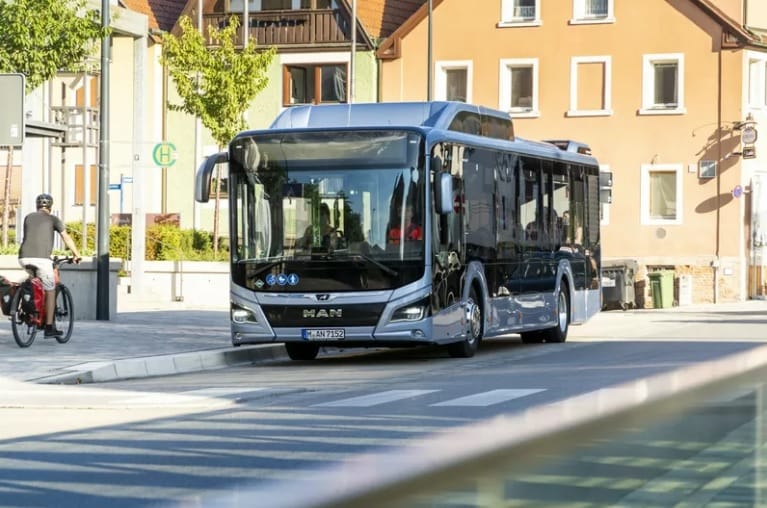
A second award covers 150 new MAN intercity CNG buses in France, further expanding biomethane mobility across regional and national routes.
France, Europe’s largest national bus market, has emerged as a leader in pragmatic, system-level decarbonisation with more than 7,700 biomethane buses and 3,500 electric buses already in operation nationwide.
As part of the largest bus decarbonization program in Europe, Île-de-France Mobilités has committed to transitioning its 10,500 strong bus fleet to 70% biomethane and 30% electric vehicles by 2029. First outlined in 2018, the decarbonization roadmap has been refined over several years of real world operations, with biomethane now established as the central pillar of their fleet strategy to strengthen energy sovereignty across the Paris region.
“CNG buses are quieter, more sustainable and cost efficient than their diesel equivalents, and deliver the range, performance and refuelling speed that electric intercity buses struggle with,” said Milosz Szymaniak, Sales Director Eastern Hemisphere, Hexagon Agility. “As Europe enters a new phase in sustainable mobility that prioritises emission reductions alongside energy independence and operational reliability, we are honoured to support another 350 CNG buses entering service in France.”
When powered by biomethane, CNG buses give municipalities anywhere the opportunity to source, or produce, their own renewable fuel locally from organic waste streams such as agriculture, wastewater and landfills, enabling transport to reduce emissions and reliance on imported fossil fuels.
While petroleum and diesel prices across Europe have surged repeatedly over the past decade, including rising 30% in a matter of weeks, biomethane prices have remained far more stable, anchored by long‑term contracts and domestic production that insulate public transport operators from global fuel price shocks.