
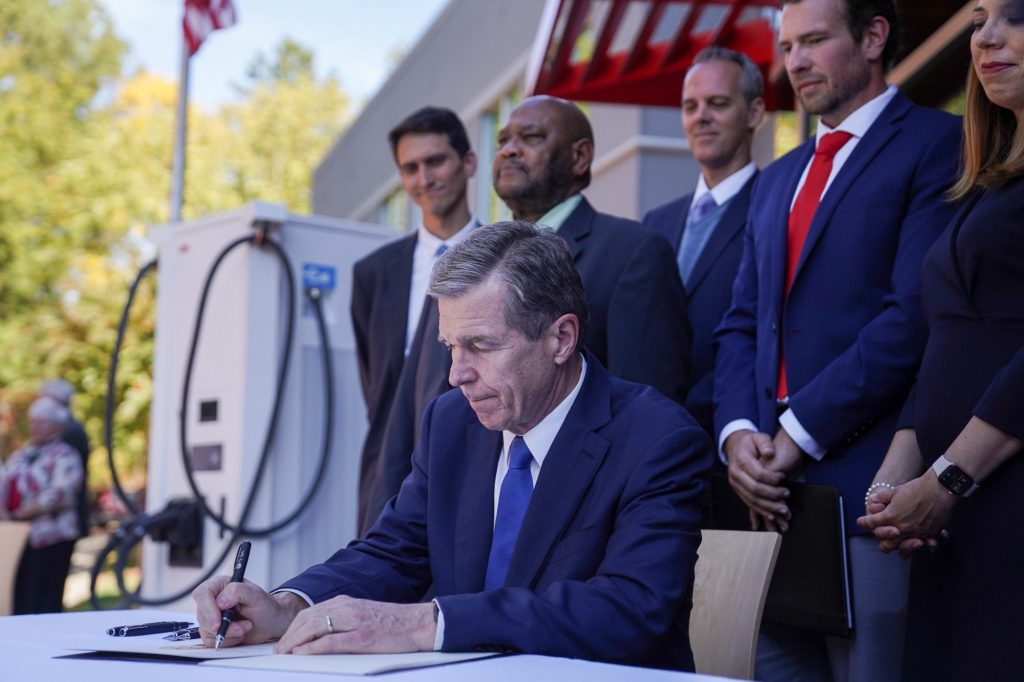
October 22, 2022. Governor Roy Cooper issued Executive Order No. 271 directing swift action to accelerate the state’s transition to a clean energy economy that creates good jobs and opportunities for all North Carolinians while protecting public health and the environment.
The Order positions North Carolina to benefit from the global market transition to zero-emission vans, buses and trucks by ensuring that new vehicle technologies will be available to businesses across the state and directing state agencies to pursue strategies and investments that will support the affordable, equitable and reliable growth of the zero-emission vehicle (ZEV) market. By reducing pollution from dirty vehicles that harm all North Carolinians and especially low-income communities and communities of color, the Order will encourage economic development and job growth across the state, maximize consumer choice for small businesses and advance the state’s climate and environmental justice objectives.
“North Carolina has demonstrated that by leading the transition to clean energy we can grow our economy and create good paying jobs while reducing local pollution and confronting the climate crisis,” said Governor Cooper. “North Carolina is already a national hub for truck and bus manufacturing and supply chain development, and we should not miss the opportunity to lead the market-driven transition already underway to cleaner and increasingly cheaper zero-emission technologies that benefit our economy and our communities.”
Auto manufacturers are increasingly committing to the production of ZEVs and a growing number of businesses in the state are transitioning to ZEVs to save money, remain economically competitive and meet sustainability goals. Executive Order 271 directs the North Carolina Department of Environmental Quality (DEQ) to work with stakeholders to propose to the Environmental Management Commission an Advanced Clean Trucks (ACT) program that would ensure zero-emission trucks and buses are available for purchase in the state. ACT would require manufacturers to sell an increasing percentage of ZEVs over time while providing flexibility, through credits, trading and other features, as segments of the market grow at different speeds. The sales targets would also drive investment in other zero-emission technologies including charging and fueling infrastructure, while bolstering North Carolina’s competitiveness in seeking billions of dollars in federal funding for clean energy development.
“Using the Clean Air Act to support the market transition to clean transportation will help reduce greenhouse gas emissions and provide health benefits to communities across our state,” said DEQ Secretary Elizabeth S. Biser.
Executive Order 271 also outlines a comprehensive strategy for the State to support automakers, fleet owners, and other partners to grow the MHD (Medium- and Heavy-Duty) ZEV market through investment in charging infrastructure, purchase incentives, workforce development, demonstration projects, technical assistance, and other strategies identified through development of the North Carolina Clean Transportation Plan and supported by unprecedented federal funding through Infrastructure Investment and Jobs Act and the Inflation Reduction Act of 2022. The Order also directs the development of a North Carolina ZEV Infrastructure Needs Assessment to identify charging and fueling needs to ensure an affordable, equitable and reliable infrastructure network to support the Advanced Clean Trucks program and the ZEV targets established in Executive Order No. 246.
“Today’s action moves North Carolina closer to a clean transportation economy that will benefit communities across the state,” said state Transportation Secretary J. Eric Boyette. “Increasing the use of zero-emission vehicles will help reduce greenhouse gas emissions, advance environmental justice and create good-paying jobs tied to clean transportation.”