
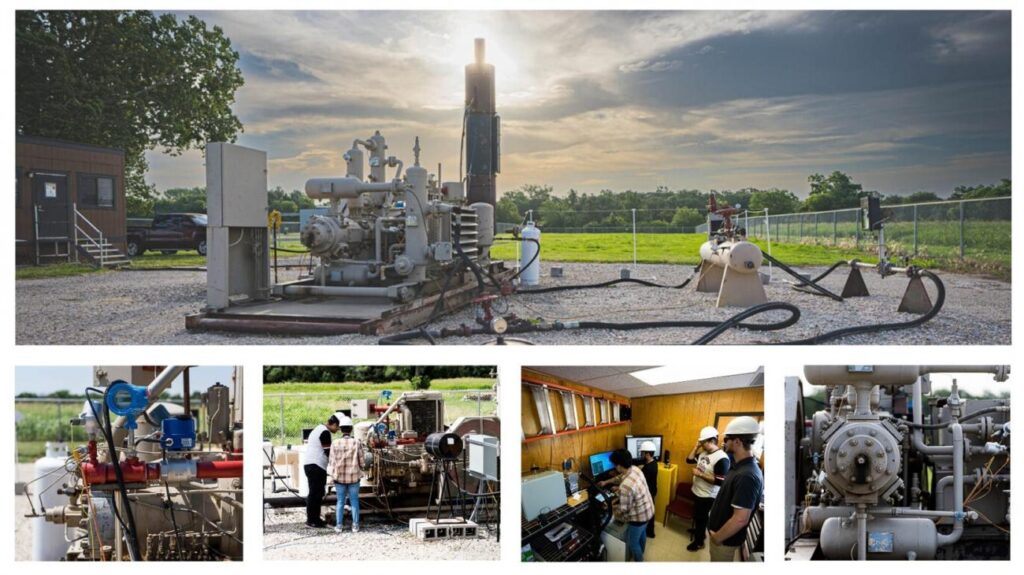
January 14, 2024. The University of Oklahoma (OU), in cooperation with NETL and industry partners, has developed an advanced retrofit kit for natural gas engines used in the gas production, gathering, transmission and processing sectors that cut emissions while enhancing performance.
“These engines carry out crucial work needed to supply consumers with natural gas,” said NETL’s Joe Renk who managed the project. “However, this machinery poses environmental challenges because it can contribute to total methane emissions each year. The project team is addressing these issues by developing a smart, novel, low-cost, field-installable retrofit kit with integrated sensors.”
In addition to financial and project management support provided by the Lab, OU leveraged partnerships with industry, including WAGO Automation, Mid Continental Rental, Elipsa, and Prescient to create the kits. The technology has been shown to cut methane emissions by up to 70% and enhance the combustion stability and operational envelope of natural gas engines.
The retrofit kit includes an advanced air management system that optimizes engine operation by manipulating key parameters while integrated sensors provide real-time data on engine performance. Virtual sensors enhance the precision of monitoring and control.
“Another benefit of these kits is that they allow operators to remotely monitor the machinery through a cloud-connected feature, allowing for preventative and predictive maintenance. This is a great feature considering that many of these production sites are in locations that are not easy to regularly access,” Renk said.
Beyond contributing to the advancement of more efficient and environmentally friendly industrial engines, the project also resulted in the establishment of an Advanced Emissions Management Laboratory at the University of Oklahoma, which is expected to accelerate research and development activities aimed at improving the efficiency and reducing emissions of the oil and gas facilities, the primary industry in Oklahoma. This site will also serve as a platform to educate local students and faculty members about natural gas compression and emissions measurement and detection technologies.