
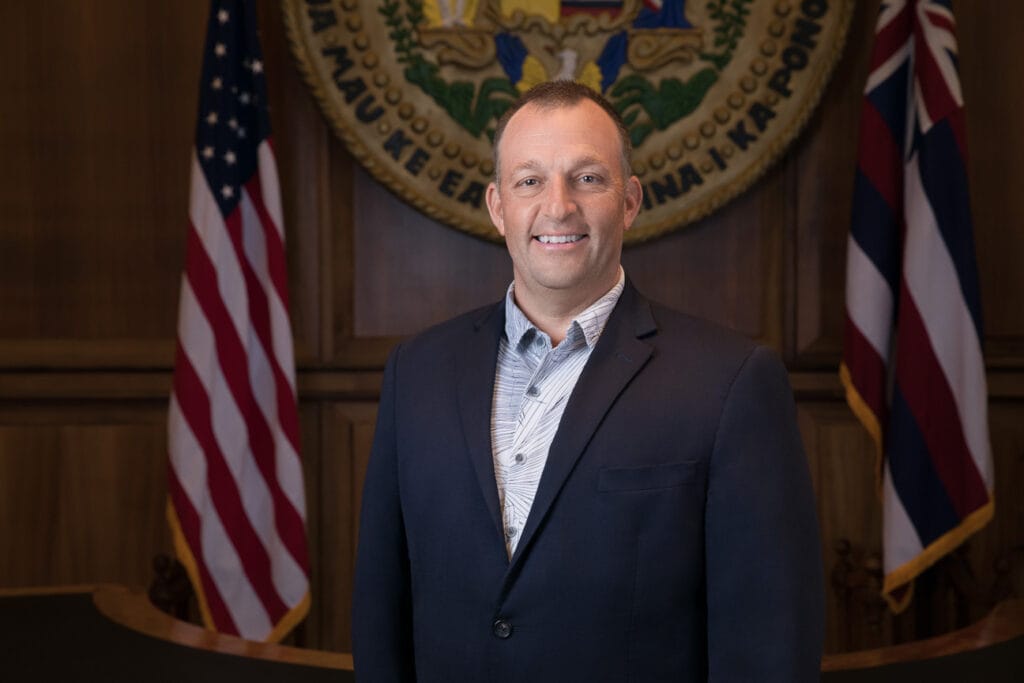
July 16, 2026. Governor Josh Green signed SB 2999, Act 258 and HB 2021, Act 259 into law. The signing of these bills strengthens the administration’s efforts to build a clean energy economy and ensure that Hawai‘i’s laws keep pace with new technologies. The action marks a transition toward cleaner and safer roads in Hawaii that better reflect the needs of residents and youth.
Hawaii’s transportation sector has the greatest potential to reduce greenhouse gas emissions in the state by incentivizing the adoption of cleaner fuels to power everyday travel. SB 2999, Act 258, establishes a statewide Clean Fuel Standard designed to cut the carbon intensity of Hawaii’s transportation fuels while opening the door to cleaner alternatives, minimizing the cost of living impacts to Hawaii residents.
By establishing a performance‑based system that rewards cleaner fuels with credits and assigns deficits to more carbon‑intensive fuels, SB 2999 encourages innovation without mandating any single technology. It gives way to public engagement, regular reporting and stakeholder input to ensure accountability throughout the development of the program.
A clean fuel standard supports local agriculture and renewable energy industries and expands markets for homegrown renewable fuels and materials, including options that can turn waste products into energy sources. This transition will incentivize investment and job creation across various sectors, strengthen public and environmental health, improve air quality and bolster energy security.
“A resilient Hawaii is defined by sustainable systems,” said Governor Green. “These investments reinforce a commitment to building co-beneficial models, allowing economic opportunities to give way to a cleaner, low-carbon future.”
The Hawaii State Department of Transportation (HDOT) will enforce this standard through a transparent, public rulemaking process and requires full implementation by January 1, 2028. “Governor Green’s signature on SB 2999 empowers HDOT to set a clear, actionable framework for clean fuels that considers all of our state goals including economy and affordability,” said HDOT Director Ed Sniffen.
Under the program, HDOT must set lifecycle emissions‑reduction benchmarks and develop a phased plan that steadily lowers transportation fuel carbon intensity, including reaching at least 10% below 2019 levels by 2035 and 50% below 2019 levels by 2045.
Public engagement, regular reporting and stakeholder input will be shared through HDOT’s Energy Security, Community & Culture Portal throughout the development of the framework.
“This is a huge opportunity to create new reinvestment in lower-cost, cleaner transportation options for local residents, using a model already proven in other states,” said Senator Chris Lee, introducer of SB 2999.
“Transportation remains Hawaiʻi’s biggest source of greenhouse gas emissions and of air pollution that affects public health,” said Representative Nicole E. Lowen, chair of the House Committee on Energy & Environmental Protection. “Establishing a Clean Fuel Standard creates a clear pathway to transition to lower-carbon transportation fuels, improve air quality and support innovative industries that create good-paying jobs here at home.”